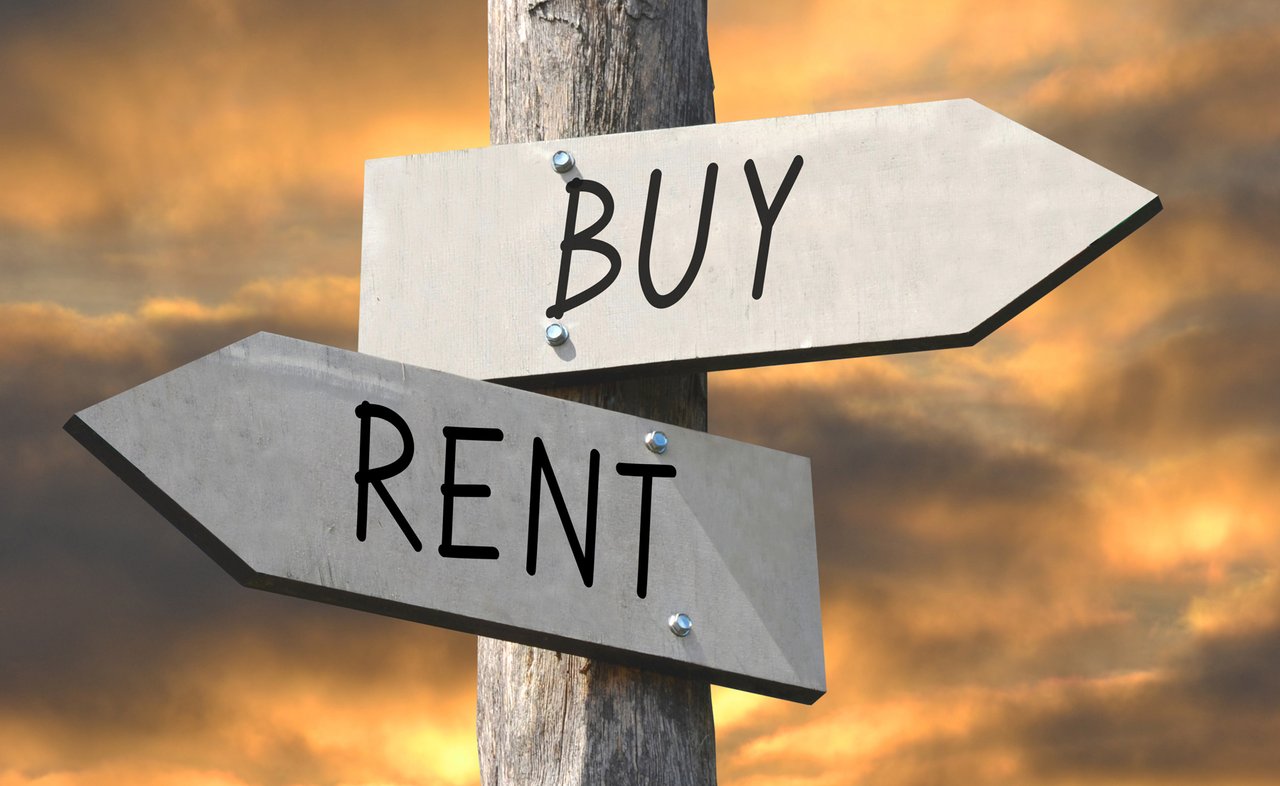
You Didn’t Miss the Housing Market. But Waiting for 2020 to Come Back Could Cost You
Tiffany Malgrat September 13, 2026
Tiffany Malgrat September 13, 2026
I hear some version of this all the time:
“I should have bought in 2020.”
“I missed my chance.”
“I’m going to wait until rates come back down.”
“Home prices are already too high.”
And I get it.
If you started your professional career around 2020, you may not have been in a position to buy then. Maybe your income wasn't where it is today. Maybe you were paying off debt, building savings, figuring out where you wanted to live, or simply weren't ready for homeownership.
Then you watched home prices climb.
You watched mortgage rates leave the 2% and 3% range.
And somewhere along the way, “I'm not ready yet” turned into “I think I missed it.”
But you didn't miss the housing market.
And waiting for 2020 to come back may be keeping you from asking a much more important question:
What is waiting actually costing you?
Let's use a renter paying $2,200 per month.
That's:
Before someone comes for me in the comments, let me say this clearly:
Rent is not “throwing money away.”
You paid for a place to live. You had a roof over your head without being responsible for replacing the HVAC, fixing the roof, paying property taxes, or dealing with the joys of discovering water somewhere water definitely should not be.
Renting can absolutely be the right financial and lifestyle decision.
But there is an important difference between a rent payment and a mortgage payment.
At the end of those six years, your $158,400 in rent payments did not leave you with an asset that you own.
And that's the part we don't talk about enough.
For this example, let's forget the absolutely bananas appreciation we saw during parts of 2020, 2021 and 2022.
That was not a normal housing market, and using those years as our expectation for the future would be misleading.
Instead, let's use a hypothetical $400,000 home and assume an average annual appreciation rate of 6%.
That does NOT mean your home is guaranteed to appreciate 6% every year. Real estate values can rise, fall or remain relatively flat, and appreciation varies tremendously by location, property and time period.
We're simply using 6% as an illustration to understand what compounding appreciation can look like over time.
At 6% annual compounded appreciation:
Purchase price: $400,000
After one year: approximately $424,000
After three years: approximately $476,000
After five years: approximately $535,000
After six years: approximately $567,000
That would represent roughly $135,000 in appreciation after five years and about $167,000 after six years.
But appreciation is only one way homeowners can build equity.
Let's say our hypothetical buyer purchased that $400,000 home with 20% down.
That means:
Purchase price: $400,000
Down payment: $80,000
Mortgage: $320,000
Loan term: 30 years
Interest rate: 6.5%
After five years of making regular principal and interest payments, the homeowner would have paid down approximately $20,000 of the original mortgage principal.
After six years, approximately $25,000 of principal would have been paid down.
Now let's put those pieces together.
After six years, in our hypothetical scenario:
Estimated home value: $567,000
Estimated mortgage balance: $295,000
Approximate gross home equity: $273,000
Of course, the homeowner didn't create all $273,000 from nothing.
They started with an $80,000 down payment.
But approximately $192,000 of that equity would have come from appreciation and mortgage principal paydown after the purchase.
Meanwhile, our renter paying $2,200 per month would have spent approximately $158,400 on rent over those same six years.
And this is where I want us to be very careful about the conclusion we draw.
I could combine the renter's payments with the homeowner's hypothetical equity growth and create some giant, terrifying number designed to make you immediately call a lender.
But that wouldn't be an honest comparison.
Homeownership costs money too.
Homeowners pay mortgage interest. They pay property taxes and homeowners insurance. They maintain and repair the home. There are closing costs associated with buying and costs associated with eventually selling.
And that $80,000 down payment in our example has an opportunity cost too. Money invested elsewhere could potentially have earned a return.
So this isn't an argument that renting automatically makes someone financially worse off.
It is an argument that time needs to be part of your calculation.
This is the conversation I wish more potential buyers were having.
People will spend years watching mortgage rates.
They'll say:
“I'll buy when rates get back to 4%.”
Or:
“I'll wait until prices come down.”
But what happens during the waiting?
You still need somewhere to live.
You're still making a housing payment every month.
Homes may continue appreciating.
Homeowners continue paying down their mortgages.
And another year passes.
Then another.
Then another.
The historically low mortgage rates of 2020 and 2021 were exactly that: historically low.
The average 30-year fixed mortgage rate actually reached a record low of 2.65% in January 2021.
That wasn't a normal interest-rate environment.
It was extraordinary.
Building your entire home-buying strategy around waiting for an extraordinary market condition to return can leave you sitting on the sidelines for a very long time.
If you've thought this, you're exactly who I wrote this for.
Maybe you watched friends buy homes five years ago that are worth considerably more today.
Maybe you're kicking yourself because you could have bought then and didn't.
Maybe looking at what $400,000 buys today compared with what it bought several years ago makes you want to scream a little.
I understand.
But here's the thing:
You cannot buy a house in 2020 anymore.
You can only make a decision with the market, income, savings, lifestyle and options you have today.
So stop comparing today's opportunity to one that no longer exists.
The better question isn't:
“Did I miss the best time to buy?”
It's:
“If I'm financially ready today and I expect to stay in this home long enough, what could waiting another five years cost me?”
That is a question worth answering.
I am a Realtor, and I'm still going to tell you this:
Not everyone should buy a house right now.
If you're planning to move soon, buying may not make sense.
If purchasing would drain your emergency savings, we should talk about that.
If the monthly payment would make you house-poor, that's a problem.
If you have career uncertainty or simply value the flexibility of renting more than ownership, renting may be exactly the right choice.
There are plenty of legitimate reasons to rent.
But “I'm waiting for 2020 prices and 2021 interest rates to come back” is not a financial plan.
And “I already missed my chance” isn't one either.
This is where the conversation gets much more interesting because there isn't one “Triangle real estate market.”
Raleigh isn't Cary.
Cary isn't Knightdale.
Knightdale isn't Wake Forest.
Wake Forest isn't Clayton.
And even within those communities, the numbers can change dramatically based on neighborhood, price point, property type and how long you expect to stay.
That's why I don't think the answer to “Should I keep renting or should I buy?” should begin with touring houses.
It should begin with a calculator.
What are you paying in rent?
How much cash do you realistically want to put toward a purchase?
What monthly housing payment actually feels comfortable?
What would you likely buy in today's Triangle market?
How long do you reasonably expect to own the property?
What would property taxes, insurance, maintenance and other ownership expenses look like?
And what would need to happen for buying to make more sense than continuing to rent?
Those numbers tell us far more than a national headline ever will.
Would buying a home in Raleigh in 2020 have been nice?
Absolutely.
So would buying Apple stock in 2004.
Unfortunately, none of us gets to make financial decisions with a time machine.
The goal isn't to identify the perfect moment in hindsight.
It's to make the best decision you can with the information and resources you have now.
Because when it comes to real estate, the cost of waiting isn't just about interest rates.
It's also about time.
And if you've spent the last several years building your career, increasing your income, saving money and getting yourself into a stronger financial position, you may be more ready today than you were when rates were 2.65%.
That matters too.
If you've been renting for several years and aren't sure whether buying actually makes financial sense for you in today's Raleigh or Triangle market, let's run your real numbers.
Before we ever start touring houses, we can look at your current rent, available cash, comfortable monthly payment, likely purchase price and how long you expect to stay in the home.
Then we can compare the options.
Maybe the numbers say you're better off renting a little longer.
Maybe they say you're ready to buy.
Either way, you'll be making the decision based on your actual financial picture, not nostalgia for a housing market that no longer exists.
And that's a much better place to start.
Ready to talk about whether buying makes sense for you?
Give me a call. I’m always happy to talk real estate.
Tiffany Malgrat, REALTOR®
SB Real Estate Advisors
📞 919-899-5337
🌐 sbrealtyadvisors.com
I always have time for your referrals.
What $2 million buys in Raleigh, which luxury neighborhoods and builders to explore, and why the right strategy matters before you tour the 2026 Triangle Parade of Hom… Read more

7 Submarkets Compared
If you’ve been renting in Raleigh or the Triangle since 2020, the question may not be whether you missed your chance to buy. It may be what waiting for the “right” mar… Read more


Has the Raleigh Housing Market Cooled?

At SB Real Estate, we help luxury buyers evaluate not only whether they love a property, but whether the price, condition, location and long-term value make sense.
We pride ourselves in providing personalized solutions that bring our clients closer to their dream properties and enhance their long-term wealth. Contact us today to find out how we can be of assistance to you!