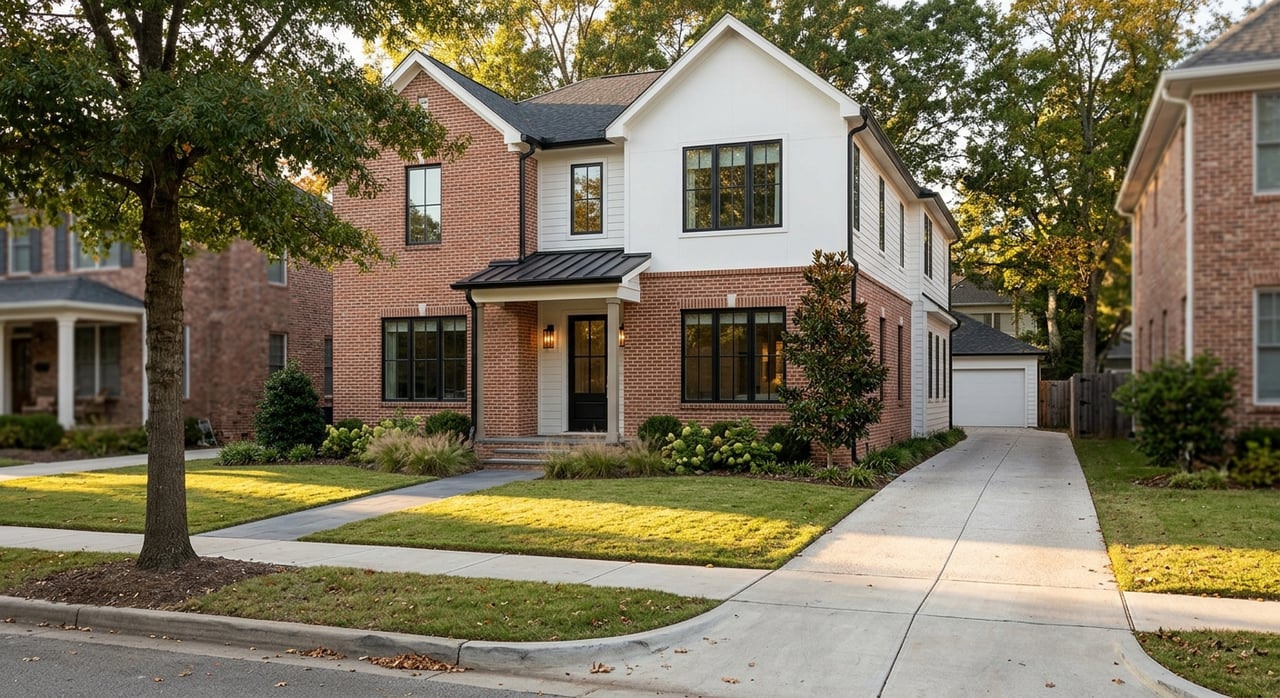
Raleigh Infill New Construction: A Guide to Buying and Building
April 9, 2026
April 9, 2026
Thinking about buying a teardown or vacant lot in Raleigh and building something new? It can be a smart path if you want a close-in location, a custom home, or a long-term hold in one of the city’s established areas. But infill deals are rarely simple, and the difference between a promising lot and a costly mistake often comes down to zoning, overlays, timing, and team selection. This guide will help you understand how Raleigh’s infill market works, what to watch for before you buy, and how to approach the process with more confidence. Let’s dive in.
Raleigh defines residential infill as development within existing residential neighborhoods or on vacant parcels in previously built areas. The city’s current community development project areas include East College Park, Martin/Haywood, and Idlewild Avenue, while redevelopment planning is also centered downtown. You can review the city’s framework for residential infill development.
In practical terms, some of the most visible infill and teardown activity tends to show up in east Raleigh and downtown-adjacent areas where older housing stock, redevelopment interest, and transit access overlap. That pattern is supported by the city’s project areas and redevelopment planning, including the Boyer-Waldrop neighborhood redevelopment information. If you are searching for a lot close to the urban core, this is often where you will see the most movement.
That said, not every older lot is an easy build site. Raleigh uses neighborhood overlays and historic districts to manage change in established areas, which can affect demolition, exterior design, and what gets approved. The city’s character preservation overlay districts are an important early checkpoint.
One of the biggest surprises for buyers is how wide the gap can be between lot prices in different parts of Raleigh. According to Zillow’s Feb. 28, 2026 update, Raleigh’s typical home value was $428,831 and its median sale price was $433,333, while Five Points reached $795,416 and Mordecai reached $685,891 in typical home value. Those neighborhood-level differences help explain why close-in land can command such a premium.
Current land listings also show a broad range. Examples in the research include a Trawick Road lot listed at $80,000, an Oxford Road lot listed at $395,000, a build-ready Glascock Street lot listed at $425,000, and a parcel on East Whitaker Mill Road listed at $1.55 million with approved site-plan work for a 9-unit residential development. The takeaway is simple: in some Raleigh submarkets, the land may be a modest part of your total project budget, while in others, the lot can absorb a very large share before construction even begins.
Nationally, the NAHB 2024 construction cost survey found that construction costs made up 64.4% of the average new-home sale price, and finished lot cost averaged 13.7%. In prime Raleigh infill locations, lot cost can run much higher than that national share. If you are targeting a close-in neighborhood, it is important to underwrite the lot and finished-home value together, not as separate decisions.
A listing may look promising, but zoning is what tells you what can actually happen on the property. Raleigh describes zoning as the legal tool that controls use, size, height, and setbacks. The city recommends using iMAPS and Raleigh zoning tools to check parcel details, overlay layers, and tax data.
Raleigh’s residential zoning districts include R-1, R-2, R-4, R-6, and R-10. The city also notes that some R-4, R-6, and R-10 properties may be subject to residential infill compatibility standards, and properties in Frequent Transit Areas may support more density than the base district alone would suggest. You can review the city’s residential districts guidance before making assumptions about what a lot can support.
If a parcel looks especially attractive on paper, a zoning verification letter may be worth considering for parcel-specific confirmation. This can help reduce uncertainty before you spend heavily on design work, contractor bids, or a nonrefundable due diligence period.
In older parts of Raleigh, the base zoning district is only part of the picture. The city’s residential infill compatibility rules can shape setbacks and building massing based on the surrounding block face, not just a standard zoning table. That means your intended house plan may not fit the lot the way you expect.
These rules can apply to some R-4, R-6, and R-10 lots on older-platted streets. They do not apply in Transit Overlay Districts, Historic Districts, Streetside Historic Overlay Districts, or on Historic Landmarks, but that does not necessarily make those properties easier. It just means a different set of rules may control the project.
For buyers, this is where a site-specific review matters. A survey, a close read of the street context, and a real conversation with your builder and advisors can save time and money. Infill is local by nature, and one street can behave differently from the next.
If you are considering a teardown, overlay districts deserve attention before you close. Raleigh’s Neighborhood Conservation Overlay Districts and Historic Overlay Districts are intended to preserve neighborhood character. In a historic district or on a historic landmark, exterior changes, demolition, or new construction can require a Certificate of Appropriateness before other permits move forward.
Some demolition actions can also be delayed. The city outlines these requirements in its character preservation overlay guidance. This is one reason a teardown opportunity that looks straightforward online may involve extra steps once you start due diligence.
Raleigh also requires a residential demolition permit application with a site plan or survey. Depending on the property, historic review, environmental approvals for private well or septic systems, and a legally recorded map may be required before the project advances.
Floodplain status is one of the easiest issues to overlook and one of the most important to verify. Raleigh states that a flood certificate is required for any new or substantially improved residential structure in a regulated Special Flood Hazard Area. You can start with the city’s flood risk guidance, which also points homeowners to FEMA’s Map Service Center and city stormwater staff.
This matters because floodplain constraints can affect design, timeline, cost, and even whether a lot still makes sense for your goals. A site that seems well located and correctly zoned can still present significant building limitations if flood requirements come into play.
Many buyers underestimate how long it takes to go from lot search to move-in. According to the NAR consumer guide on buying land and building a new home, the design phase often lasts 3 to 6 months, and construction typically lasts at least 12 to 16 months, with possible delays beyond that.
Raleigh’s local review process adds another layer. The city’s review turnaround dashboard shows 3 to 5 business days for intake on portal-submitted projects, followed by initial review, resubmittals, and final review. Some residential first reviews benchmark at 3 business days, while final review can take 1 to 3 business days.
Those numbers are helpful, but they do not capture the full end-to-end schedule. Lot search, due diligence, demolition review, design revisions, lender requirements, and permit cycles all stack together. Raleigh also notes in its site permit review process that ready-for-issuance plans can be voided after six months if contractor information is incomplete or holds remain unresolved.
An infill project works best when you treat it like a team sport. In North Carolina, a general contractor license is required when the contract value is $40,000 or higher, and the state provides a public license search and complaint process under Chapter 87. Verifying the license should be a baseline step, not an afterthought.
NAR also notes that buyers purchasing land often benefit from working with a REALTOR, and that construction lenders typically want detailed plans, budgets, and timelines. For many buyers, especially those relocating or building for the first time, professional guidance can help connect the lot, budget, builder, and lending pieces into one realistic plan.
In Raleigh, the most useful advisory team is often one that already understands local infill compatibility reviews, demolition permitting, historic-overlay processes, floodplain checks, and utility coordination. Experience with close-in lots can help you spot issues earlier, negotiate with better context, and avoid committing to a site that does not support your end goal.
Before you write an offer on a lot or teardown in Raleigh, make sure you can answer these questions:
If any of those answers are unclear, slow down and verify them before you commit. Infill opportunities can be compelling, but the best results usually come from patience, strong due diligence, and realistic budgeting.
Buying a lot and building new in Raleigh can be rewarding, especially if you want a location that is hard to find in standard resale inventory. But infill is not just about finding dirt at the right price. It is about understanding how city rules, neighborhood context, timing, and finished value all interact.
That is where a data-driven, detail-oriented process can make a real difference. If you want help evaluating teardown opportunities, comparing lot economics, or building a smart acquisition plan in Raleigh, SB Real Estate offers tailored guidance for custom-build and infill buyers who want a clear, well-managed path forward.
What $2 million buys in Raleigh, which luxury neighborhoods and builders to explore, and why the right strategy matters before you tour the 2026 Triangle Parade of Hom… Read more

7 Submarkets Compared

If you’ve been renting in Raleigh or the Triangle since 2020, the question may not be whether you missed your chance to buy. It may be what waiting for the “right” mar… Read more

We pride ourselves in providing personalized solutions that bring our clients closer to their dream properties and enhance their long-term wealth. Contact us today to find out how we can be of assistance to you!