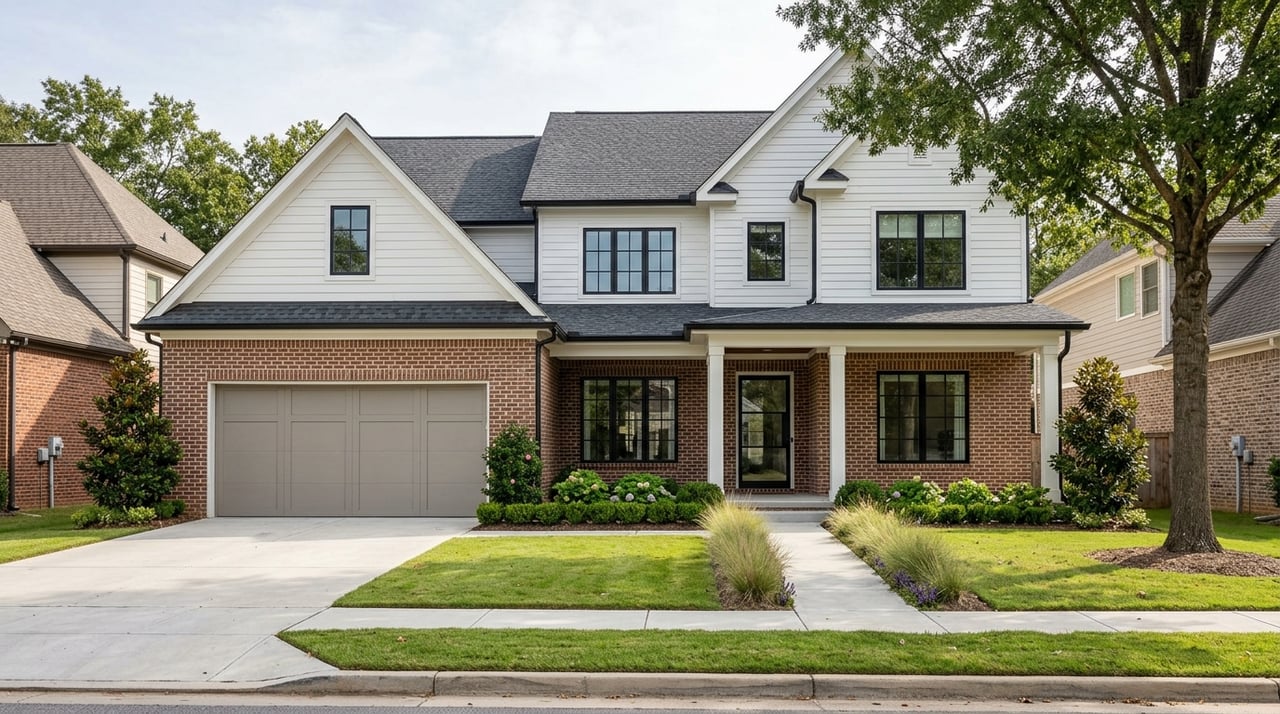
Comparing West Cary Luxury Neighborhoods by Lifestyle
May 14, 2026
May 14, 2026
Wondering which West Cary luxury community actually fits your lifestyle? That is a smart question, because West Cary is not one single luxury market. It is a collection of master-planned neighborhoods, club communities, and mixed-use areas, each with a very different feel. If you are comparing options in Cary, this guide will help you understand what sets these communities apart and what to verify before you make a move. Let’s dive in.
West Cary attracts buyers who want a polished suburban setting with strong everyday convenience. The Town of Cary reports more than 107 miles of paved greenways and 492 miles of sidewalks, which supports an active, connected lifestyle.
For shopping, dining, and entertainment, many West Cary residents rely on Parkside Town Commons and Park West Village. Transportation is also part of the long-term story here, with the NCDOT Complete 540 project underway and scheduled for completion in 2028, with the goal of easing traffic on N.C. 55 and other regional roads.
One of the biggest mistakes buyers make is treating West Cary like one interchangeable area. In reality, the communities here appeal to different priorities. Some are centered on club amenities, while others are more about trails, housing variety, or a village-style layout.
That distinction matters if you are relocating, buying for a specific lifestyle, or trying to narrow your search efficiently. A golf-centered community will feel very different from a lake-oriented neighborhood or a mixed-use village plan, even if all are in greater West Cary.
Amberly is the largest and most amenity-heavy option in this group. According to Carolina Preserve’s master-community information, Amberly was planned in 1995, spans more than 1,100 acres, and includes a town-center footprint plus eight residential neighborhoods.
That scale creates a wide range of housing experiences within one broader community. The other seven sections include luxury single-family homes and townhomes, while Carolina Preserve serves as the 55+ segment.
Amberly stands out for the depth of its resident amenities. The Amberly and Carolina Preserve system includes a resident’s club, two outdoor pools, waterslides, fitness facilities, walking trails, a gym, and Bradford Hall clubhouse.
Carolina Preserve adds even more with a 35,000-square-foot clubhouse, indoor and outdoor pools, tennis, pickleball, bocce, dance and pottery studios, and more than 120 clubs. If your idea of luxury includes built-in activity, recreation, and social options, Amberly is hard to ignore.
Amberly can work well if you want a master-planned environment with many moving parts and lifestyle options. It is especially appealing if amenities are not just a bonus for you, but a major part of how you want to live day to day.
Preston is best known as Cary’s legacy country club community. Preston Development Company describes it as Cary’s premier country club community, with golf villas, condos, townhomes, estate homes, and other homes across a broad style range.
This is an important point for buyers. Preston is not only about one home type or one narrow look. It offers variety, but the club environment is what gives the community its identity.
Prestonwood Country Club is the main draw. It offers 54 holes of golf, 15 tennis courts, a 14,000-square-foot fitness center, an aquatics center with three pools and a three-story slide, Kids Club programming, and multiple dining venues.
Another notable difference is that homeownership in Preston is not required for club membership. That means the club serves as a social anchor for a wider group, rather than functioning only as a homeowners-only amenity.
If you want a country club lifestyle first and a housing choice second, Preston may feel like the clearest fit. In this comparison, it is the most club-centric option.
Cary Park feels more neighborhood-first than club-first. The Town of Cary says the Cary Park Lake Greenway is a 1.9-mile loop around a two-part lake entirely within the subdivision, with links to Mills Park and future trail connections.
That greenway and lake system shape the feel of the community. Cary Park tends to read as more self-contained than some of the other West Cary options.
The pool system is a major part of life here. The Cary Park pool includes a six-lane, 25-yard lap pool, a children’s pool with a slide, early-morning adult lap swim, swim-team opportunities, and full lifeguard coverage.
The housing mix is also broad, with condos, townhomes, single-family homes, and some custom homes noted in local neighborhood guides. That range can appeal to buyers who want a strong neighborhood identity without the country club framework.
If you picture evening walks around a lake loop, neighborhood swim culture, and easy trail use, Cary Park has a distinct appeal. In this group, it offers the strongest pure neighborhood-lake feel.
Carpenter Village is the most village-style option in this comparison. Cary’s Carpenter Community Plan says the area was designed as a small activity center with diverse uses, housing types, and historic resources.
The plan includes single-family homes, townhomes, condominiums, and loft apartments within the Rural Village. That mix gives Carpenter Village a more layered and varied feel than a conventional subdivision.
Its planning story is what sets it apart. The community plan emphasizes mixed uses, multiple housing types, and gathering-oriented spaces such as trailhead and village parks.
Location is another part of the appeal. The Town of Cary notes convenience to Research Triangle Park, Raleigh-Durham International Airport, and I-540, which can be meaningful if commute pattern and regional access are high on your list.
If you value a village feel, housing variety, and connections beyond the neighborhood itself, Carpenter Village deserves attention. Among these communities, it has the strongest walkability and mixed-use story.
Highcroft Village reads as a more classic move-up neighborhood. Town greenway information shows the Green Hope School Greenway running along the Highcroft area and connecting to Highcroft Elementary School and Sears Farm Road Park.
That creates a more park-and-neighborhood orientation than a destination-club identity. The overall impression is residential, established, and straightforward.
Local neighborhood guides describe Highcroft Village as a pool-and-playground community at NC-55 and Green Hope School Road with larger detached homes, including traditional and craftsman-style houses in the roughly 2,500- to 4,000-plus-square-foot range.
Compared with Amberly or Preston, Highcroft Village feels less centered on extensive club infrastructure. Compared with Carpenter Village, it feels less mixed-use. Its appeal is the conventional larger-home suburban experience.
If you want a traditional detached-home setting with park access and a more classic neighborhood feel, Highcroft Village may be the best match. In this comparison, it offers the most conventional move-up feel.
| Community | Core Identity | Housing Mix | Standout Feature |
|---|---|---|---|
| Amberly | Amenity-dense master plan | Single-family homes, townhomes, 55+ segment in Carolina Preserve | Deepest resident amenity package |
| Preston | Country club community | Golf villas, condos, townhomes, estate homes, other homes | 54 holes of golf and full club lifestyle |
| Cary Park | Neighborhood-first lake community | Condos, townhomes, single-family homes, some custom homes | Lake loop and swim-club culture |
| Carpenter Village | Mixed-use village plan | Single-family homes, townhomes, condos, loft apartments | Village feel and diverse uses |
| Highcroft Village | Traditional move-up neighborhood | Larger detached homes | Park-oriented suburban setting |
A practical way to compare West Cary is to start with your daily-life priorities. Ask yourself whether you care most about club access, trail use, lake atmosphere, housing variety, or commute convenience.
Buyers focused on Research Triangle Park, RDU, and I-540 often gravitate toward the west Cary and NC-55 side of the map. Preston, meanwhile, remains more useful as Cary’s luxury club benchmark than as the outer western corridor benchmark.
In West Cary, community identity does not always tell the whole story of a specific address. Some neighborhoods have layered associations, and amenity access can vary from one section to another.
Before you move forward, it is smart to confirm details such as:
This is especially important in Amberly, where multiple sub-neighborhoods and Carolina Preserve create different experiences within one umbrella community. It also matters in Preston, where Prestonwood membership is not tied to homeownership, and in Cary Park, where pool registration distinguishes between homeowner access and broader membership access.
The best West Cary community for you depends less on price point alone and more on how you want your home to support your routine. Preston is the club-driven choice. Amberly is the amenity-rich master plan. Cary Park is the lake-and-neighborhood option. Carpenter Village offers the village-style mixed-use setting. Highcroft Village delivers the more traditional larger-home suburban feel.
If you are relocating or trying to compare neighborhoods efficiently, the real advantage comes from translating these broad descriptions into the street-by-street reality of available homes. That is where clear local guidance can save you time and help you avoid a mismatch.
If you want help narrowing down the right West Cary community, SB Real Estate can guide you with local insight, curated neighborhood perspective, and a polished, high-touch buying experience.
What $2 million buys in Raleigh, which luxury neighborhoods and builders to explore, and why the right strategy matters before you tour the 2026 Triangle Parade of Hom… Read more

7 Submarkets Compared

If you’ve been renting in Raleigh or the Triangle since 2020, the question may not be whether you missed your chance to buy. It may be what waiting for the “right” mar… Read more


Has the Raleigh Housing Market Cooled?

At SB Real Estate, we help luxury buyers evaluate not only whether they love a property, but whether the price, condition, location and long-term value make sense.
We pride ourselves in providing personalized solutions that bring our clients closer to their dream properties and enhance their long-term wealth. Contact us today to find out how we can be of assistance to you!