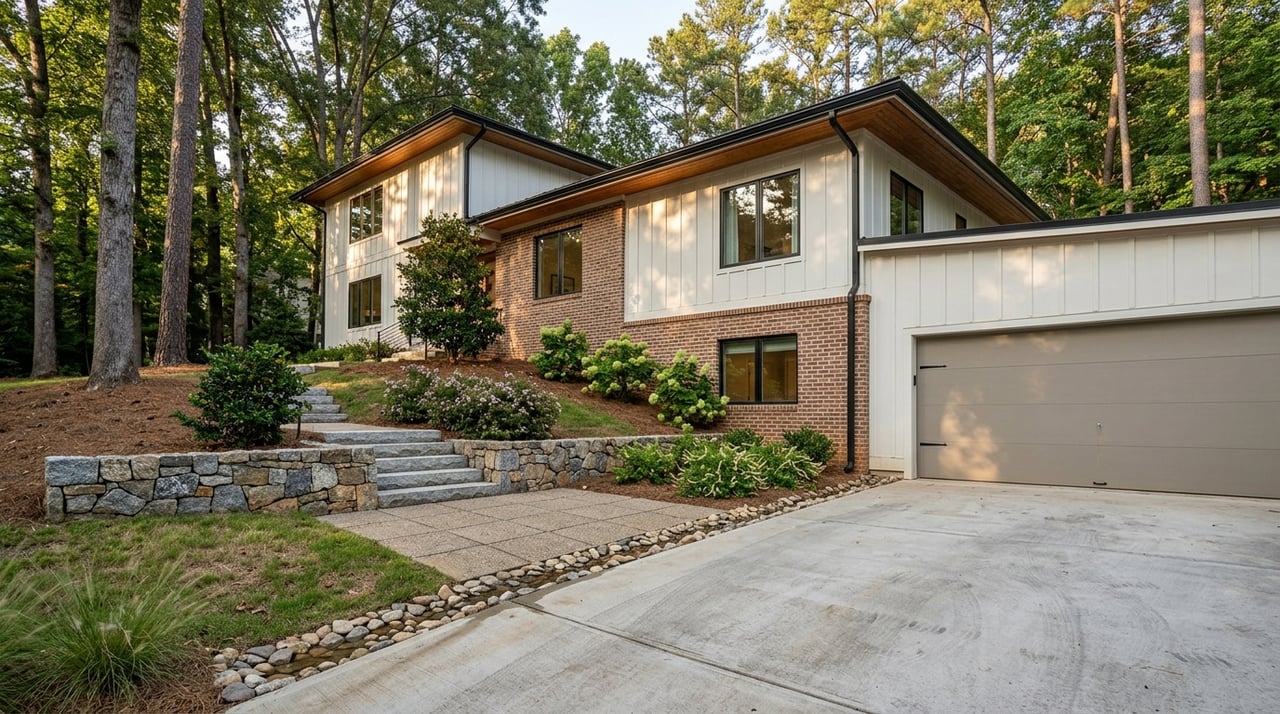
Buying A Custom Home In West Wake Forest
June 25, 2026
June 25, 2026
If you are thinking about buying a custom home in West Wake Forest, the lot matters just as much as the floor plan. A beautiful homesite can open the door to privacy, trees, and outdoor living, but it can also bring questions about zoning, drainage, utilities, and permits. This guide will help you understand what to look for, what to verify early, and how to make smarter decisions before you commit. Let’s dive in.
West Wake Forest appeals to buyers who want more breathing room without losing access to the rest of the Triangle. The Town of Wake Forest reports 561 acres of parks, open space, natural land, and trails, along with more than 50 miles of developed and undeveloped greenway trails. That combination supports a lifestyle that feels more nature-forward while still keeping daily convenience in view.
Regional access is also part of the draw. The town places Raleigh-Durham International Airport about 25 miles away and notes drive-time access to North Raleigh, Downtown Raleigh, RTP, and Durham. Wake Forest also says WRX express bus service connects Downtown Wake Forest, Triangle Town Center, and Downtown Raleigh.
For custom-home buyers, that mix can be especially appealing. You may be able to pursue a more tailored home on a distinctive lot while staying connected to work, travel, and the broader Raleigh market.
In West Wake Forest, lot selection is not only about views, trees, or privacy. It is also a feasibility decision shaped by local rules. Wake Forest’s Unified Development Ordinance governs zoning, subdivision, land use, grading, stormwater management, historic preservation, and development standards like setbacks, lot sizes, landscaping, tree preservation, and building design.
That means a lot that looks perfect at first glance may still require careful review before you move forward. Your home design, driveway layout, outdoor living plan, and even how much clearing is possible can all be influenced by site conditions and town requirements.
This is one reason custom-home buyers benefit from slowing down at the lot stage. It is often easier to revise expectations early than to discover limits after you are under contract.
Before you buy a parcel, Wake Forest recommends verifying the zoning district and permitted uses through the official zoning map and Planning Department. Properties within town limits or the ETJ are subject to Wake Forest zoning and building regulations. In practical terms, that means your custom plan may need changes to fit dimensional standards.
In some cases, a buyer may need to explore a variance or rezoning path. That does not mean the lot is a bad option, but it does mean more due diligence is needed before you treat the parcel as build-ready. A custom build should start with facts, not assumptions.
If you are comparing multiple homesites, zoning review can help you quickly separate the lots that are straightforward from the ones that may carry more risk, time, or extra cost.
Wooded lots often create the character many custom buyers want. They can offer privacy, a natural backdrop, and a more established feel than a bare homesite. But wooded parcels also require a more careful look at clearing strategy, grading, and long-term site work.
Wake Forest regulates urban forestry through its UDO, and the town requires street trees in new developments. The town’s development fee schedule also lists a tree-clearing permit, which is a good reminder that removing trees is not simply a builder preference. It is part of the planning process.
Sloped lots can also create opportunity and complexity at the same time. A slope may support a walk-out design, a terrace, or dramatic backyard space, but it can also increase the need for grading, retaining walls, drainage planning, and foundation design.
Construction can change a lot more than the shape of the house. NC State Extension notes that newly constructed homes often face soil infertility, compaction, and improper drainage. Steep slopes and poorly drained areas can also make lawn and landscape establishment more difficult.
This is why drainage and soil improvement should be treated as part of the real budget, not as a cosmetic add-on after move-in. If you are picturing a usable backyard, screened porch, patio, or fire feature, those improvements need to work with the lot’s water flow and finished grading.
A smart custom-home budget should account for items such as:
When these items are discussed upfront, you are less likely to end up with a beautiful house and a yard that is hard to use after heavy rain.
Flood review is one of the most important steps for any custom homesite. Wake Forest regulates floodplain development through its UDO and defines development broadly to include grading, paving, excavation, drilling, and other site changes. The town states that, in general, no new development is allowed in the Special Flood Hazard Area unless an exemption applies.
Wake Forest also says a floodplain development permit is required before changes in the floodplain, from major projects to smaller work such as fences, pools, and sheds. Just as important, the town notes that standard homeowners insurance does not cover flood damage.
If a lot has any floodplain concern, you want that answer early. It can affect where you build, what you build, whether outdoor features are feasible, and what future ownership costs may look like.
One of the biggest mistakes buyers can make is assuming utility service is automatic. In Wake Forest, water and wastewater service for the town is operated by Raleigh Water within the designated urban service area, while the town retains authority over when and where new water and sewer services can be extended.
That means utility availability should be confirmed for the specific parcel, not guessed based on a nearby street or neighborhood. Two lots in the same general area may not offer the same path to service.
If public water and sewer are available, that can simplify planning. If they are not, you will want to shift into well-and-septic due diligence right away.
If a parcel is not tied into public utilities, your review process changes. North Carolina DEQ says private water wells are handled through county health departments, and state guidance on well construction standards applies to private well work. If a lot will use a private well, you should confirm permitting, water quality testing, and any nearby contamination concerns before closing.
For septic, NC State Extension recommends obtaining the septic permit and soil evaluation sheet from the local health department. You should also confirm the location of the tank, drainfield, and repair area before buying.
That repair area matters more than many buyers realize. Extension cautions that the repair area should be protected from excavation, additions, garages, outbuildings, swimming pools, and other soil disturbance. If your dream plan includes a pool, detached structure, or extensive outdoor living, septic layout can directly affect what is possible.
Site work can require permits before the home itself starts going vertical. Wake Forest requires a Land Disturbance Permit when land-disturbing activity reaches 0.50 acre or more, and the town may also require one for smaller work when sediment control is needed.
The town also has erosion and sediment control requirements for proposed development. In practical terms, clearing, grading, and drainage work may come with permitting and inspection consequences well before framing begins.
This is another reason to separate lot price from total project cost. A parcel that seems attractively priced may still carry meaningful pre-construction expenses tied to site prep and compliance.
North Carolina requires a general contractor license when the project is valued at $40,000 or more. The state licensing board advises buyers to verify the license, check references, confirm insurance and workers’ compensation coverage, and make sure the contract clearly addresses permits, payment schedule, start and completion dates, warranty terms, and cleanup.
For a custom home in West Wake Forest, those questions should be even more specific. A builder may have strong design and finish work, but you also want to know whether they have handled wooded lots, sloped lots, septic systems, utility coordination, erosion control, and drainage planning in Wake County.
Helpful builder interview questions include:
These questions can help you separate the cost of building the house from the cost of making the lot truly buildable and maintainable.
When buyers picture a custom home, they often focus on finishes, cabinetry, appliances, and square footage. Those choices matter, but the full budget should also reflect the realities of the land. On a nature-oriented lot, outdoor living and site stabilization can become a major part of the investment.
A realistic budget may need room for grading, irrigation, soil amendment, patios or terraces, screened porches, fire features, retaining walls, and drainage work that keeps the yard usable over time. NC State Extension’s guidance on compacted soil and poor drainage after construction is a strong reminder that these items work best when planned alongside the house, not after the fact.
That bigger-picture approach tends to produce a better result. You are not only building a home. You are building a homesite that functions well from the driveway to the back property line.
Buying a custom home in West Wake Forest often involves more moving parts than a typical resale purchase. You may be evaluating lot feasibility, comparing builder options, coordinating remote decision-making, or trying to make sense of land, budget, and design at the same time.
That is where a high-touch advisory approach can make a real difference. SB Real Estate works with buyers pursuing custom construction and lot acquisition, with guidance that helps you think through builder selection, contract review, and the local factors that can shape your timeline and budget.
If you are relocating or buying from out of town, that support can be even more valuable. Clear local insight, strong communication, and a structured process can help you make confident decisions without feeling like you have to solve every variable on your own.
If you are exploring a custom-home purchase in West Wake Forest and want a trusted advisor to help you evaluate lots, builders, and the full picture, schedule a personal consultation with SB Real Estate.

Moving to Raleigh NC? How to Choose the Right Neighborhood and Schools | Saira Bruno

Discover how to choose a neighborhood that fits your lifestyle, daily routines, and future goals—not just your home search.

Are homes with well water harder to maintain?
I don't believe AI is replacing great Realtors anytime soon
We pride ourselves in providing personalized solutions that bring our clients closer to their dream properties and enhance their long-term wealth. Contact us today to find out how we can be of assistance to you!